
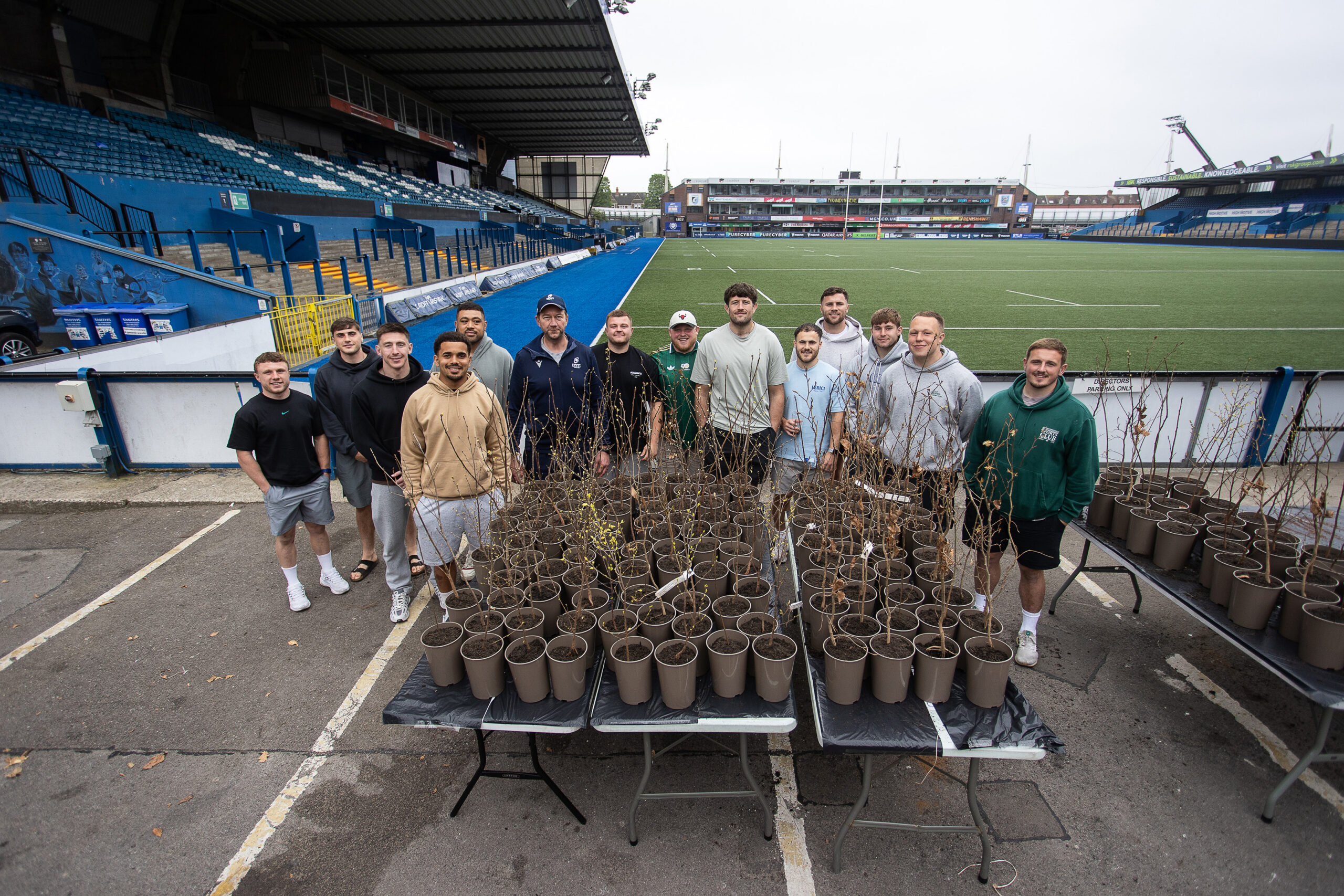
Cardiff Rugby have partnered with Pugh’s Garden Village on an exciting project to plant 150 trees to mark the club’s sesquicentennial season.
With the club already finalising plans to launch a significant new sustainability strategy, this joint initiative is the latest step to reduce environmental impact, protect nature and support communities.
You can read about the club’s sustainability strategy below.
Pugh’s Garden Centre, long-standing supporters of the club, donated 150 native tree saplings to commemorate the upcoming 150th anniversary.
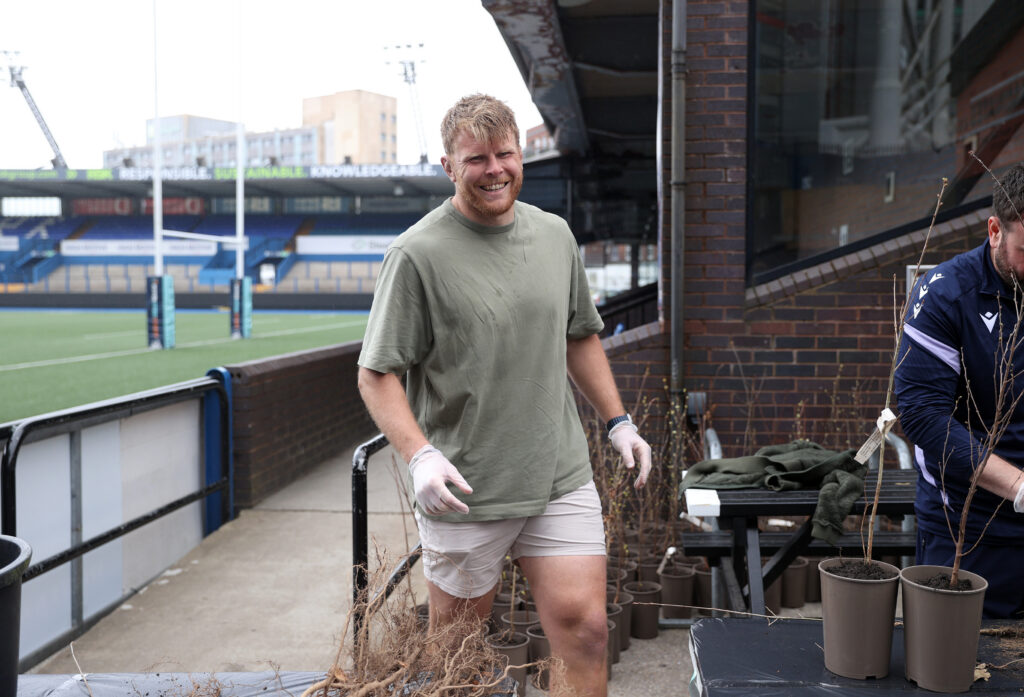
Combined with a Braai, the first team squad got their hands dirty to plant the saplings, which will now be stored in the Pugh’s Garden Centre nursery throughout the summer.
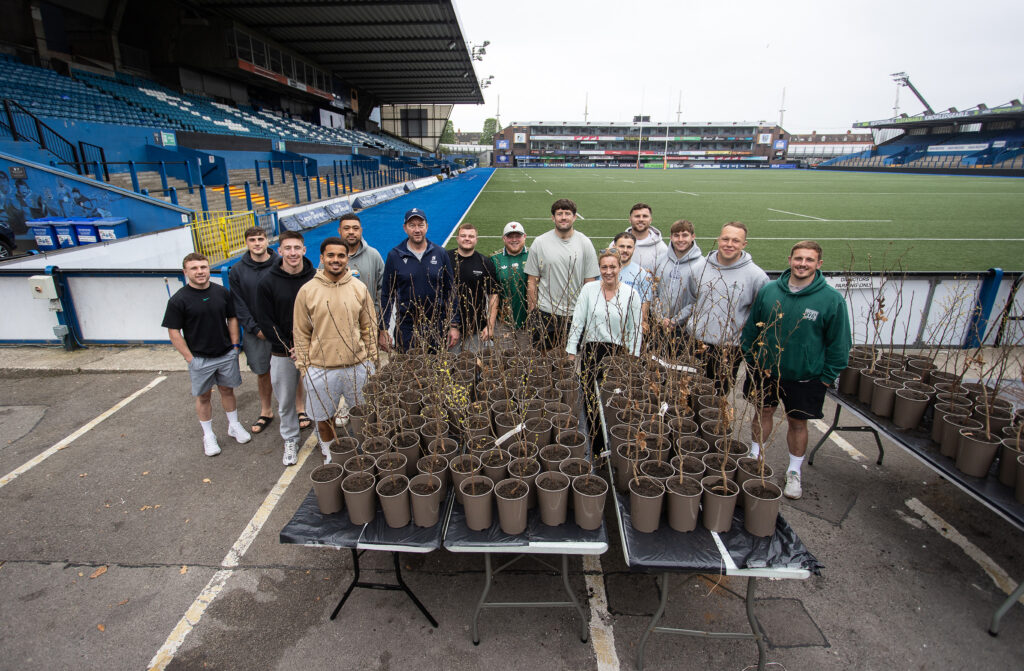
Trees to be rooted in community through Primary School partnerships
When further established, these woodland trees, including oak, cherry, birch and mountain ash, will be donated to primary schools across the Cardiff Rugby region as part of a Community Foundation programme.
Pugh’s Garden Village Marketing Manager, Amy Sinclair, said: “As a family business rooted in our local communities, we are incredibly proud to support Cardiff Rugby in marking such a significant milestone. The club’s 150th anniversary provides a wonderful opportunity to create a lasting legacy that will benefit both people and the environment for generations to come.
“At Pugh’s, we are passionate about encouraging more people to connect with nature and understand the positive impact that trees can have on biodiversity, wildlife and wellbeing. By donating these 150 native saplings, we hope to help inspire young people across the region while creating habitats that will continue to grow and thrive long into the future.
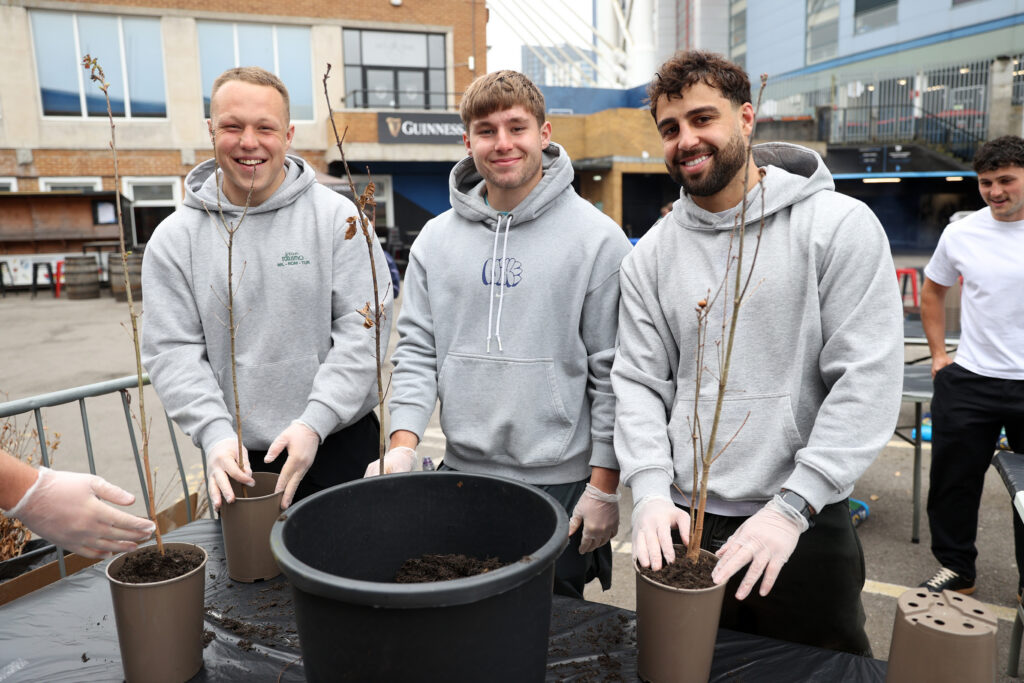
“It was fantastic to see the players getting involved in planting the trees, and we look forward to seeing them take root in schools and communities throughout the Cardiff Rugby region.”
Tackling the nature and biodiversity crisis together
With Wales facing a nature and biodiversity crisis, the project gives the club the opportunity to mark the landmark 150th season in a meaningful way which benefits the community.
The State of Nature Wales 2023 report shows that one in six species is at risk of extinction. Continued pressures also mean Wales is now considered one of the most nature‑depleted countries on Earth.
Each of the six trees selected by Pugh’s are native to Wales and promote biodiversity, providing different habitats and food sources throughout the seasons, as well as carbon storage.
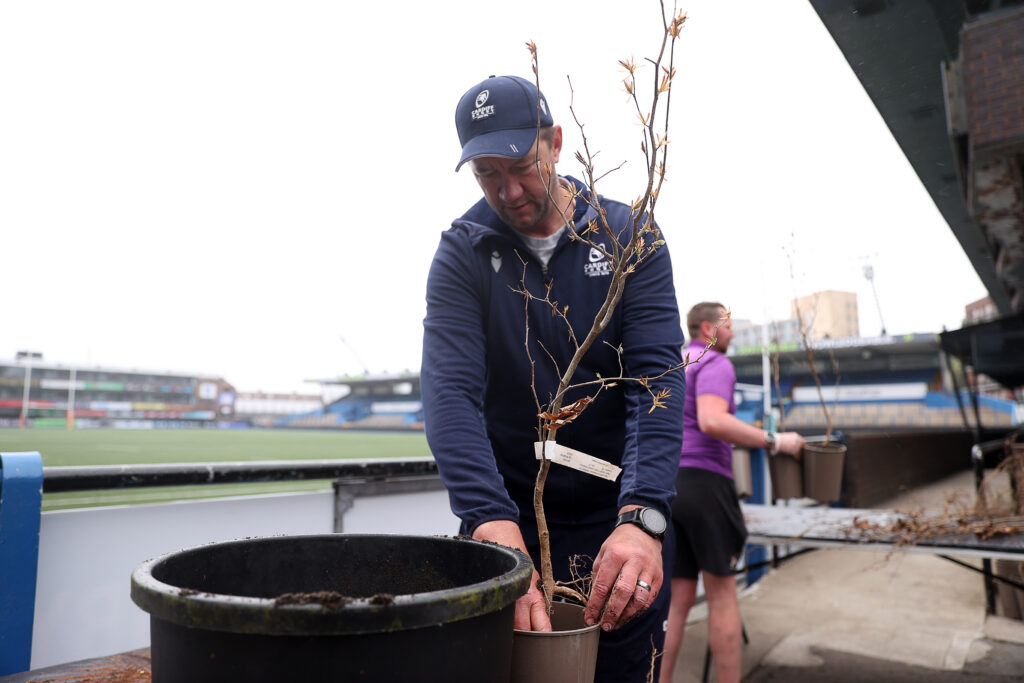
Rhianon Griffiths, the club’s sustainability coordinator, said: “This is an exciting project, which gives us an engaging and long-lasting opportunity to mark our 150th anniversary, while helping tackle some of the nature and biodiversity challenges facing us.
“We are really grateful to Pugh’s for again supporting us, and we had a great afternoon planting the saplings ahead of distribution in the new school year.
“Any school within the Cardiff Rugby region is eligible to claim a tree, and these will be delivered by players, coaches and staff from across the club.
“We have six varieties, which grow to different sizes and in different conditions, while bringing a variety of different habitats and bio-diverse benefits – for instance a mature English oak tree can support an incredible 2,300 species.
“This is just the first of many new initiatives we have planned and we look forward to launching our strategy in the summer.”
The club will announce further details on how Primary Schools within the Cardiff Rugby wider region can apply for a tree directly in the coming days.
For more information on the project or Cardiff Rugby’s sustainability strategy please contact Rhianon.griffiths@cardiffrugby.wales
Cardiff Rugby trees:
Sorbus aucuparia (Mountain Ash or Rowan Tree)
• This tree will grow to 15 meters and will live for 200 years
• It has white flowers in May, and red berries appear in late summer early autumn
• Great tree for wildlife
• Needs a medium space
Betula pendula (Lady of the Woods or Birch Tree)
• Very graceful, slender tree with white peeling bark
• Gives dappled shade
• This tree can reach 30m tall and can live up to 100 years
• They produce catkin like flowers in April and May.
• Wildlife friendly tree supporting up to 300 different species of insects, birds and animals
• Needs a medium to bigger space
Fagus sylvatica (Queen of the Woods or Beech Tree)
• This is a majestic tree that will grow to 40m at maturity
• Leaves will turn brown in autumn but will mostly remain on the tree throughout winter
• Important tree to support some of the rarest wildlife within the UK.
• Needs a large space
Prunus avium (Wild Cherry or Bird Cherry)
• This tree grows up to 20 metres and flowers in April
• Flowers are followed by fruit in September which feed wild birds
• Very pretty tree
• Fruit is edible but is smaller and sharper that the cultivated varieties
• Needs a medium space
Prunus padus (Wild Cherry or Bird Cherry)
• Very similar to the prunus avium reference
• This variety has fragrant pendula flowers
• A little smaller in height, growing to around 15m
• Darker fruit
• Needs a medium space
Quercus Robur (English Oak Tree or King of the Woods)
• Very stately tree growing around 40m tall at maturity
• Very slow growing tree but noted for its strength
• This tree supports countless different species of wildlife and can live for up to 1000 years
• Needs a large space